Product Designer
Modern Medicine
Healthcare Management Platform
Problem Statement
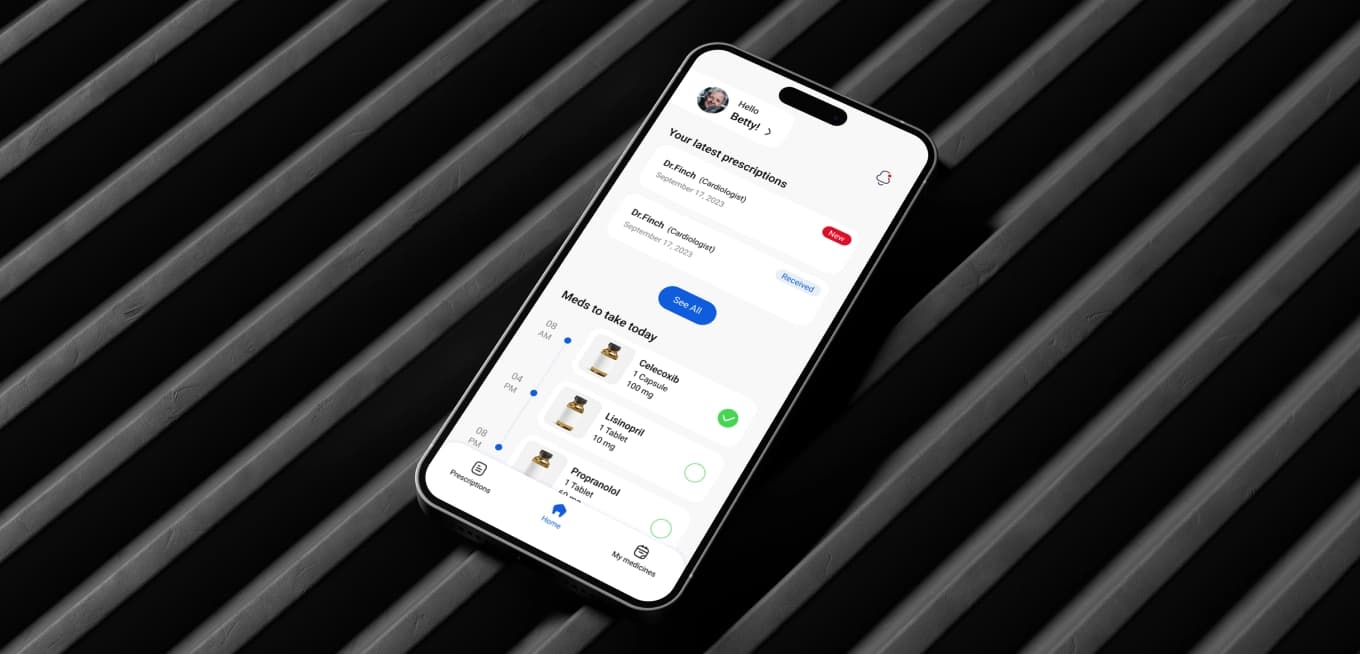
Many patients, especially older adults, struggle with consistently adhering to prescription medication regimens due to difficulties accessing pharmacies for refills and services. This leads to poor health outcomes. There is a need for better pharmacy access to improve medication adherence.

Telemedicine
- Virtual Consultations
- Remote Monitoring
- Video Visits

Patient Records
- Digital Health Records
- Medical History
- Secure Storage

Appointments
- Smart Scheduling
- Calendar Sync
- Reminders

Prescriptions
- Digital Prescriptions
- Medication Tracking
- Refill Alerts
Analytics
- Health Data Insights
- Custom Reports
- Trend Analysis
Secondary Research
First of all I started a research on how medicines are handed out nowadays and what are the common problems users encounter with prescription medications and pharmacies.
Here are a few key ways that medicines are dispensed today:
- Doctors write prescriptions that patients take to a pharmacy to be filled. The pharmacist reviews the prescription, fills it, and dispenses the medication to the patient. This is the most common way to obtain prescription medications.
OTC medications like pain relievers, cough and cold medicines, etc. can be purchased directly off store shelves without a prescription. Customers select the medications they need and pay for them at checkout.
Many pharmacies now offer mail-order services where patients can have their prescriptions delivered directly to their home. This can make it more convenient for patients to get refills.
In hospitals and clinics, automated dispensing cabinets are sometimes used to store and dispense medications securely. Nurses and doctors can access the medications using fingerprints or passcodes.
Doctors can electronically send prescriptions directly to pharmacies. This can help reduce errors from handwritten prescriptions.
As we see based on our design brief and late technology E-prescribing is widely used and related to our work.
- E-prescribing, or electronic prescribing, allows doctors to electronically send prescriptions directly to pharmacies instead of using handwritten or phoned-in prescriptions.
- It typically involves the use of e-prescribing software integrated with the doctor's electronic health record (EHR) system. Doctors can look up medications, select the appropriate one, specify dose and quantity, and transmit it digitally to the pharmacy.
- E-prescribing eliminates the need for patients to drop off paper prescriptions. It also reduces errors due to poor handwriting legibility.
- E-prescribing allows prescriptions to be received and processed faster. The pharmacy can start filling the medication sooner for the patient.
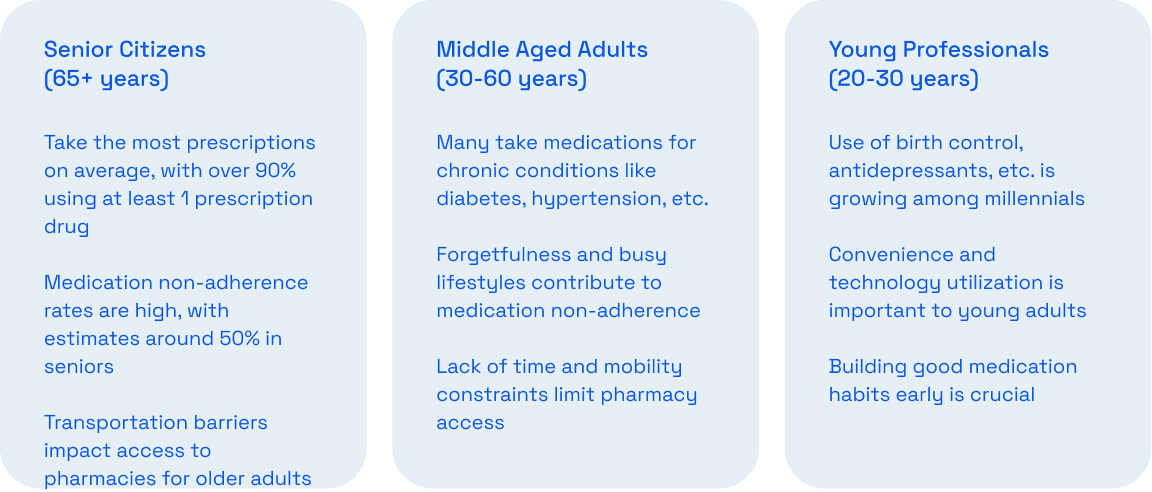
Based on research, some of the key demographics and use cases that could benefit most from a pharmacy app include:
Curb Cut Effect
Based on curb cut effect which describes how products and policies designed for people with disabilities often end up helping everyone, we choose the Senior Citizens as our main users.
Persona
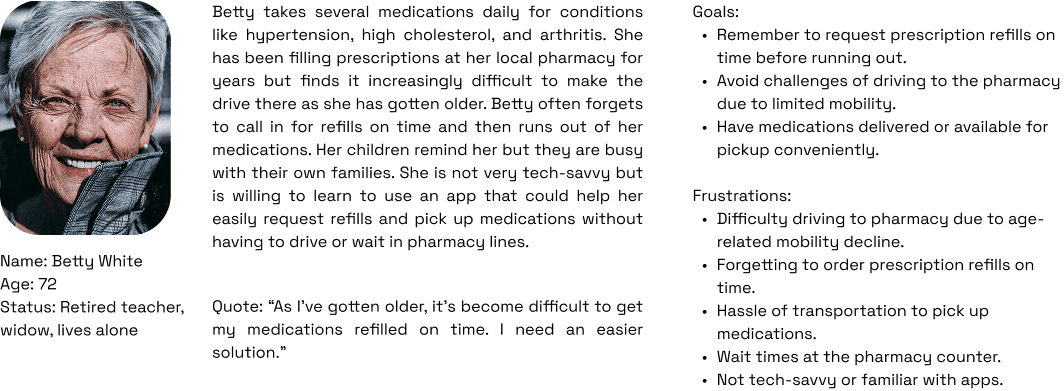
with the data collected from the research, I created a persona representing an Ideal user of the application. The persoan helped me arrive at better solutions as it gave an in-depth understanding of the user goals and frustrations and the overall personality.
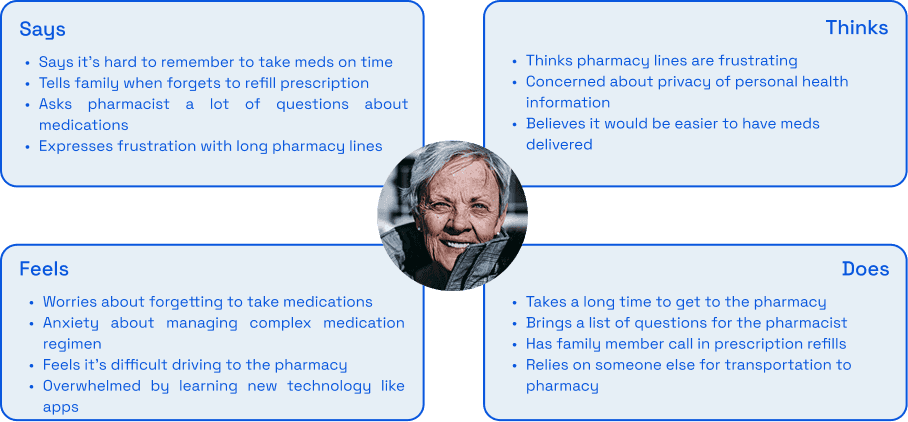
Empathy Map
This process was done to define the target audience with more clarity, as well as illustrate their needs and actions. Empathy mapping helped me gain perspective on their thoughts and feelings.
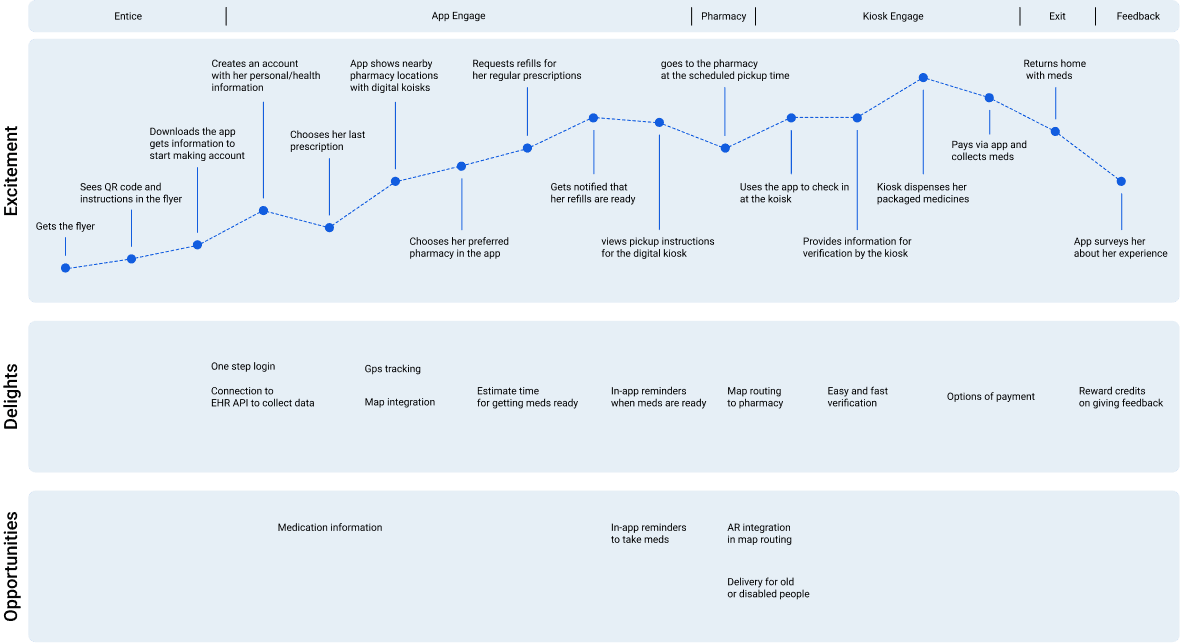
User Journey Map
I made a visual representation of the user's journey across all touchpoints of our application to understand where we can improve the user experience.
Secondary Research
Developing a mobile app that enables users to easily request prescription refills, get reminders for adherence, and pick up medications from an automated kiosk will increase adherence and access for patients who have difficulty visiting traditional pharmacy counters.
The key problems are:
- Transportation issues getting to pharmacies
- Access barriers to obtaining prescription refills
- Forgetting to take medications as prescribed
- Long wait times for pharmacy services
The app aims to address this by:
- Enabling easy prescription refill requests
- Providing reminders and notifications for adherence
- Allowing pickup from convenient kiosk locations
- Streamlining the pickup process
The hypothesis is that by improving convenience, reminders and access, the app will increase adherence to medication regimens, especially for demographics like older adults.
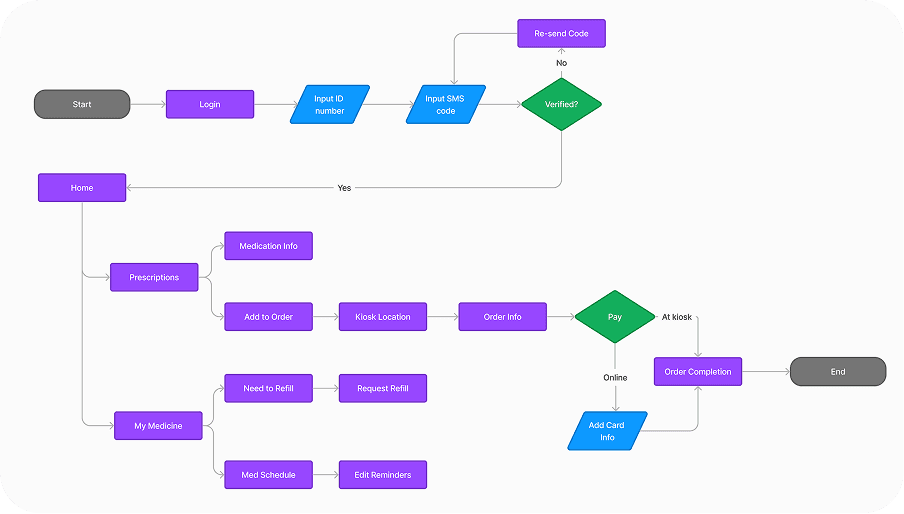
User Flow
I created a Flow using Figjam to illustrate how the user will navigate through the application.
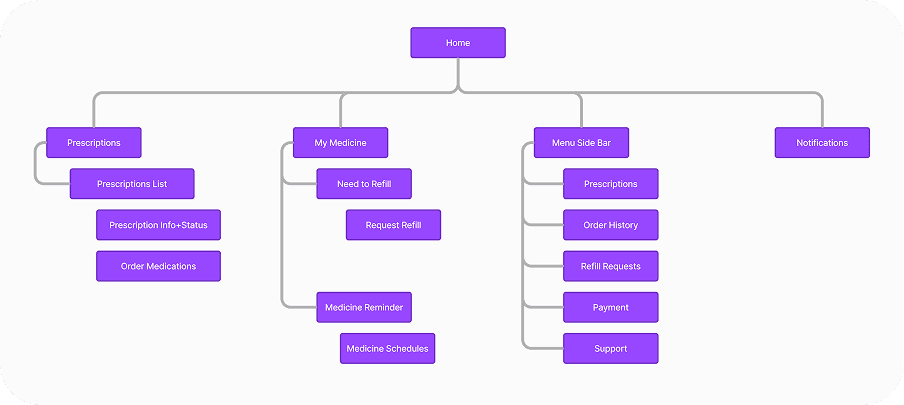
Information Architecture
I used Information Architecture to categorise features under different sections to make them easier to find.
Wireframes
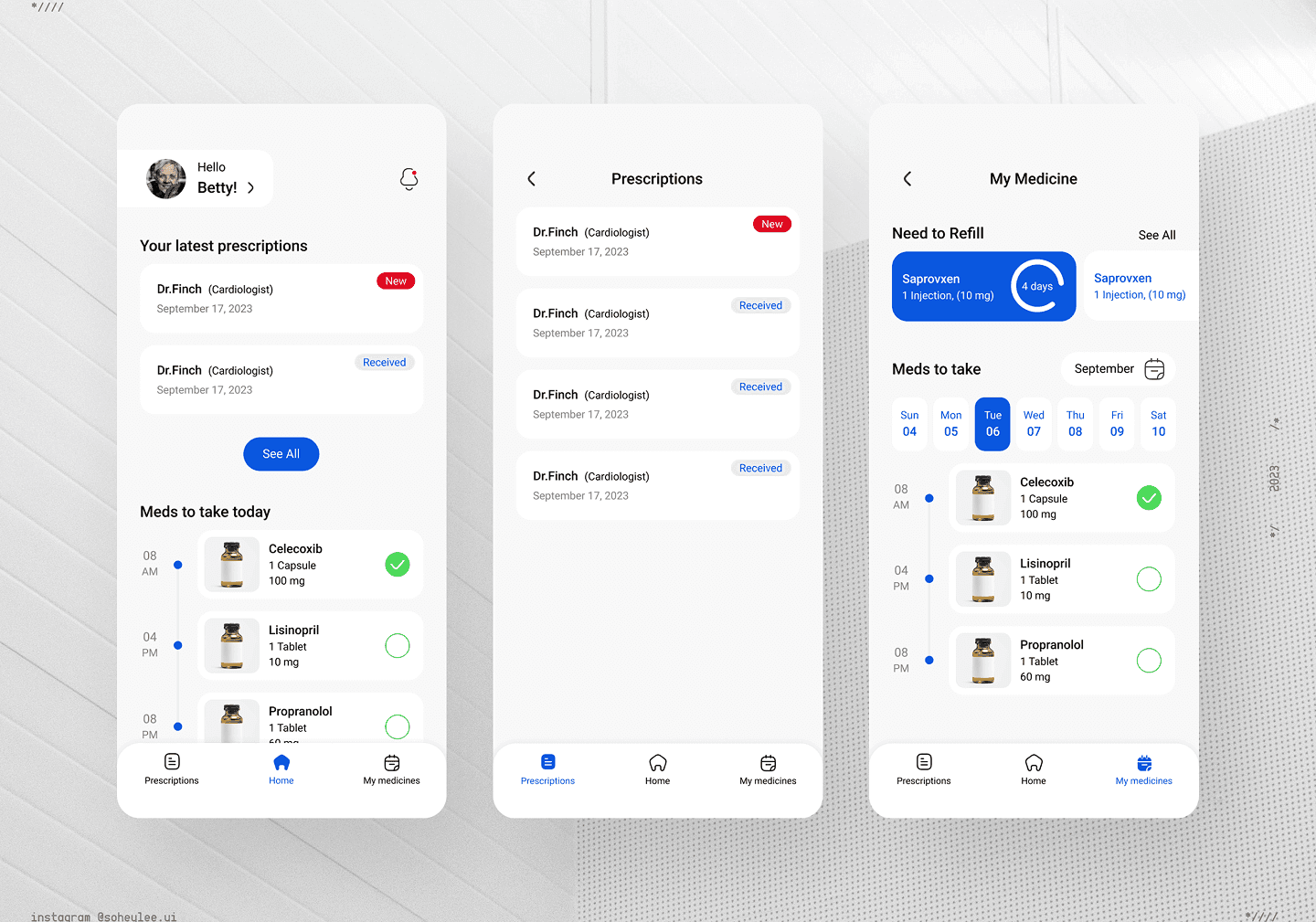
First, I sketched the low fidelity wireframes on paper. After making corrections in them as per IOS guidelines I moved on to designing High Fidelity wireframes using Figma.